
Introduction
The Fix takes viewers deep inside Rhode Island’s opioid crisis, sharing raw and honest stories from people who use drugs alongside the frontline workers who stand in the middle of the emergency—paramedics, harm-reduction advocates, treatment providers, and community responders who witness the heartbreak, resilience, and repeated loss up close. Together, their perspectives create a fuller, more human understanding of what this epidemic truly looks like day after day.
But The Fix is not just a portrait of struggle—it’s a look at real progress. Rhode Island has taken bold, compassionate steps over the years, implementing changes that have reduced drug-related harms and saved countless lives. The documentary highlights these efforts not as a victory lap, but as proof that change is possible when a community refuses to give up on its people. It’s a hopeful reminder that even in the middle of an opioid epidemic, compassion, evidence-based care, and unwavering support can make all the difference.
Quotes from The Fix: Examining Rhode Island’s Opioid Epidemic
“Fentanyl – a highly potent opioid, which experts say is 100x stronger than morphine and 50x stronger than heroin, and drug dealers are mixing it with everything from pills to heroin, and even pot.”
“From February 2016 to March 2018, there has been more than 900 emergency department visits for overdose in Providence alone. During that time, there were 3450 visits in Rhode Island for overdoses. To put that in perspective, that’s an average of 129 visits a month or 4.2 every day.”
“Nobody wants to see people coming in with repeat overdose, but you can’t let that frustration be present in your work. It’s a matter of offering what we know is the right thing based on the best available evidence and research that we have, and repeatedly offering it to them in hopes that every time it’s building a bridge, and one day somebody will walk over it.”
“Today I am a father, a son, and I am a boyfriend – just things that I have never dreamed of being in the past three years, I am.”
GARY
“I didn’t want to be in denial. As much as you don’t want to face it as a parent, you have to.”
“Within 30 days, he was completely hooked on prescription pills and not long after that he made the switch to heroin.”
Recovery
“Another protocol of the Perry-Goldner Act is providing a peer recovery specialist in every emergency department across the state [of Rhode Island].”
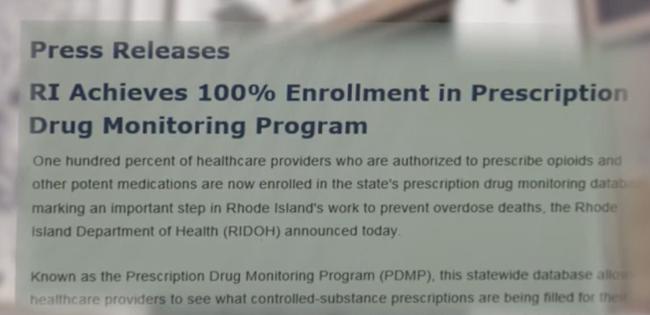
“The Prescription Drug Monitoring Program is a means by which I can access recent prescriptions, generally for the past year, for patients I might consider prescribing opioids to. I can see if they have gotten other controlled substances … that might help me decide whether or not it is safe and appropriate to give someone an opioid prescription.”
“Our ultimate goal is to keep people alive long enough that they can get to the point where they are ready for sustained recovery. Recovery is a process that is often prolonged and often involves relapse, but people do recover from opioid dependence and do come out on the other side of that and do achieve sustained recovery. We want to give people the opportunity to achieve sustained recovery and we do that by trying to keep them alive in the meantime.”
“When an inmate walks out the door, their treatment does not end. Discharge planners at Codac (the oldest and largest non-profit, outpatient provider of treatment for Opioid Use Disorder in Rhode Island) coordinate schedules and counselling so recovery continues without interruption. This helps with transportation to and from 7 locations so patients can receive treatment, and they also help with housing and even jobs.”
Continue Learning
Please review the additional resources below to find more information on the some of the topics discussed in this resource. If you have any suggestions, comments, or concerns please do not hestitate to contact me!